Malkangiri, July 13 (UDN): Once shielded by the fear of Maoist activity, the dense forests of Odisha’s Malkangiri district are now confronting a different challenge—large-scale deforestation driven by illegal timber smuggling and shifting cultivation, commonly known as podu cultivation.
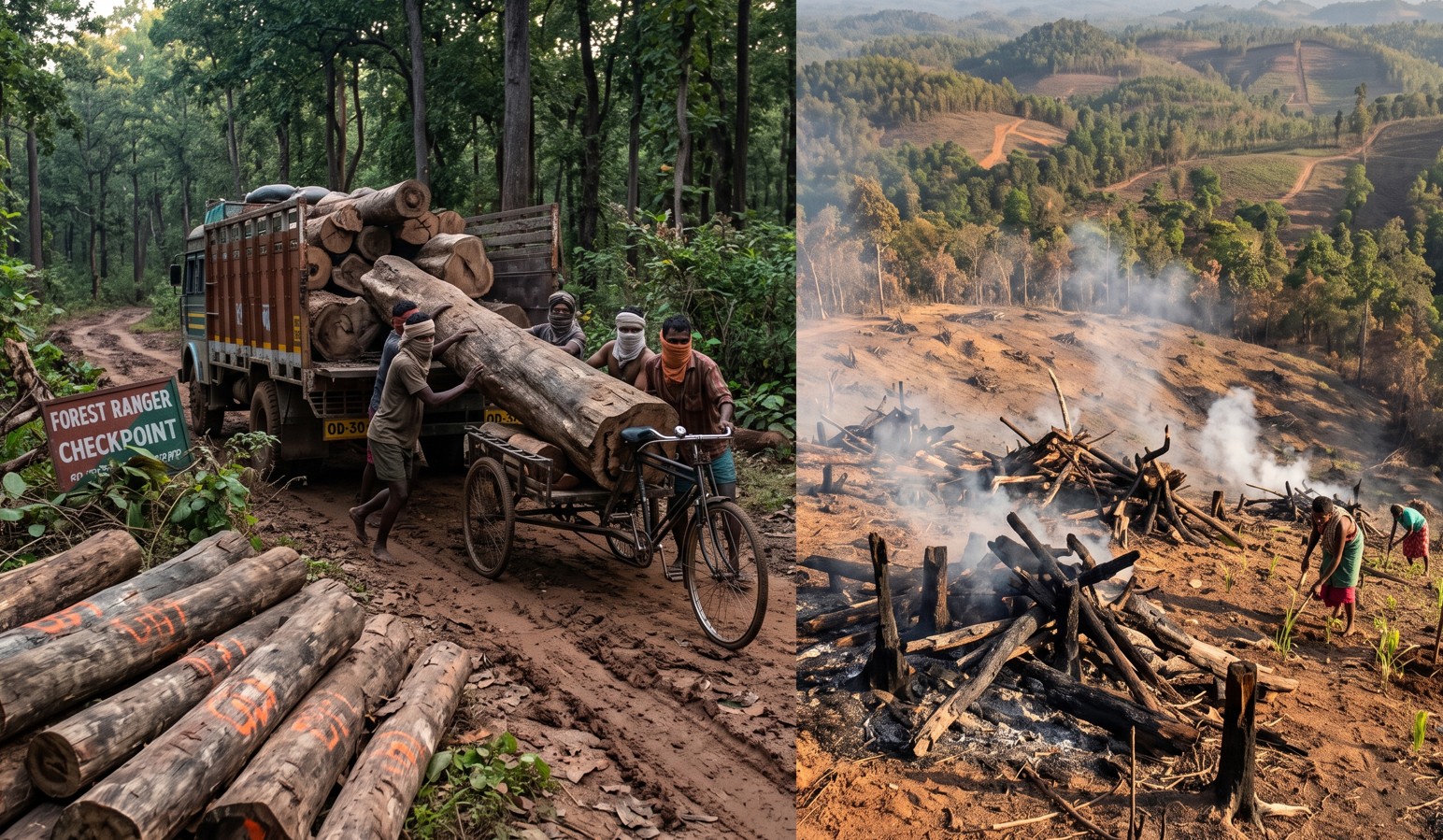
Representational Image
Drone visuals from several forest stretches have revealed extensive damage to the region’s green cover. Hills that were once blanketed with dense vegetation now bear visible scars of tree felling, burnt patches, and vast stretches of cleared land.
The destruction is particularly evident along the nearly 60-kilometre stretch between Badigata and Bonda Ghati, where roadside forests have steadily given way to barren hillsides. Residents allege that valuable timber has been illegally extracted for years by organised smuggling networks, while significant portions of forest land have been cleared for podu cultivation.
The scale of the damage has raised questions over forest surveillance and enforcement. Locals argue that such widespread destruction could not have occurred without escaping the notice of authorities responsible for protecting the forests.
“Every year, Van Mahotsav is celebrated with great enthusiasm, and saplings are planted for the cameras. But very little attention is paid to whether those saplings survive, while thousands of mature trees continue to disappear from Malkangiri’s forests,” said a local resident, urging the Forest Department to strengthen field monitoring.
The situation has also highlighted the contrast between plantation drives in urban centres and the ongoing degradation of forests in remote areas. Environmental observers say conservation efforts must focus not only on planting new trees but also on protecting existing forests from illegal activities.
Responding to the concerns, the Forest Department said it has been conducting awareness campaigns in villages and encouraging community participation in forest conservation. Officials maintained that strict action would be taken against anyone found violating forest laws.
Malkangiri Divisional Forest Officer (DFO) Sai Kiran acknowledged that shifting cultivation remains one of the major contributors to forest degradation in the district.
“Some local communities are practising shifting cultivation by cutting trees inside forest areas. We appeal to them to adopt sustainable agricultural methods, including intercropping, instead of clearing forests. Felling trees in reserved forest areas is a punishable offence, and appropriate legal action will be taken against violators,” the DFO said.
With illegal logging and encroachment continuing to threaten Malkangiri’s forests, conservationists say stronger enforcement, community engagement, and sustainable livelihood alternatives will be critical to safeguarding one of Odisha’s most ecologically significant forest regions.