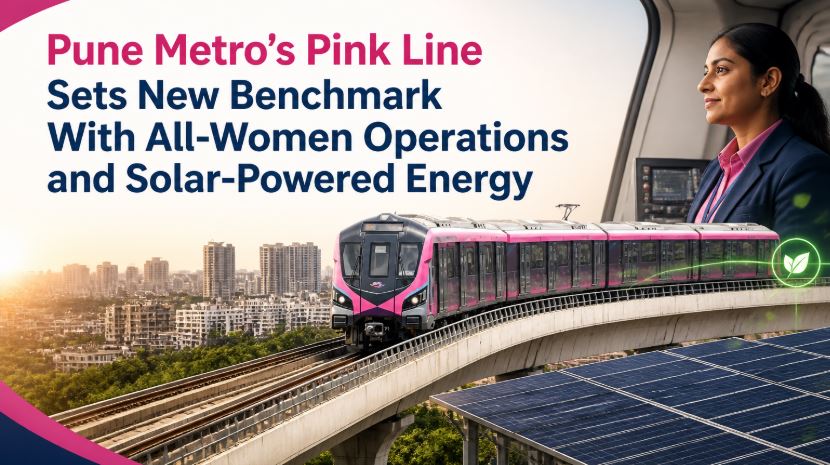
New Delhi, Nov 3: Pune’s urban transport infrastructure is poised for a significant transformation with the upcoming inauguration of Metro Line 3, popularly known as the Pink Line. The 23-km elevated corridor has drawn attention for two distinctive features — an all-women train operating team and a plan to meet nearly 30 per cent of its electricity requirements through solar energy.
Representational Image
Prime Minister Narendra Modi is scheduled to inaugurate the much-anticipated corridor, which will connect the Hinjewadi IT hub with Shivajinagar, offering a major boost to urban mobility in Pune.
Ahead of the inauguration, Maharashtra Cabinet Minister Chandrakant Patil highlighted the project’s emphasis on commuter convenience, women’s empowerment and environmental sustainability.
Describing the corridor as an important addition to Pune’s transport network, Patil said it would make daily journeys faster, easier and more comfortable for thousands of residents, particularly IT professionals and students travelling between Hinjewadi and central Pune.
He also underlined the significance of placing women at the forefront of metro operations and adopting solar energy to meet a substantial share of the project’s power requirements.
Women’s Empowerment Meets Green Mobility
One of the most notable aspects of Pune Metro Line 3 is its all-women train operating team, reflecting a significant step towards greater participation of women in the urban transport sector.
The proposed use of solar energy to meet around 30 per cent of the corridor’s electricity demand is another major feature, highlighting the project’s focus on sustainable public transportation.
Together, these initiatives are being viewed as an effort to combine inclusive employment opportunities with environmentally responsible infrastructure development.
Connectivity Boost for Pune’s IT Hub
BJP Bihar President Sanjay Saraogi welcomed the upcoming inauguration, describing it as an important milestone in Maharashtra’s infrastructure development.
He said the new metro corridor would significantly benefit students, IT professionals and other daily commuters travelling between Hinjewadi and Shivajinagar. The improved connectivity is expected to save commuting time and reduce travel-related stress for thousands of people.
Bihar Minister Ram Kripal Yadav also praised the Centre’s emphasis on infrastructure development, pointing to investments in highways, bridges, metro networks and railway connectivity across the country.
23.2-Km Corridor to Ease Urban Congestion
Developed by the Pune Metropolitan Region Development Authority (PMRDA), Metro Line 3 is an elevated corridor stretching approximately 23.2 kilometres, with 23 stations connecting Maan near Hinjewadi to the District Court station in central Pune.
The project has an estimated cost of Rs 8,313 crore and is being implemented under a public-private partnership (PPP) model.
Besides improving access to the Hinjewadi IT Park, the corridor is expected to ease pressure on Pune’s road network, reduce dependence on private vehicles and provide commuters with a more efficient public transport alternative.
With its focus on modern connectivity, women’s participation and renewable energy, Pune Metro’s Pink Line is emerging as a noteworthy example of how urban infrastructure can combine technological progress with social inclusion and environmental sustainability.