
New Delhi, Nov 16: A site once associated with piles of garbage has emerged as a vibrant public space promoting reuse, recycling and environmental awareness. The former waste collection point near Delhi University’s Patel Chest has been transformed into a Reduce, Reuse and Recycle (RRR) Centre and an attractive selfie point under the Swachh Bharat Mission-Urban 2.0.
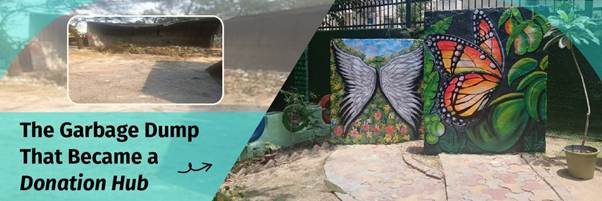
The makeover has turned a neglected dhalao ghar into a community-focused facility where discarded materials have been given a fresh purpose. The initiative, led by DMSWSL in association with the Municipal Corporation of Delhi’s Civil Lines Zone, demonstrates how urban waste spaces can be repurposed through creative design and public participation.
Discarded materials become public attractions
The transformation made extensive use of materials that would otherwise have been discarded. Around 45 old tyres and more than 3,000 used bricks were repurposed to create colourful installations and develop the new public space.
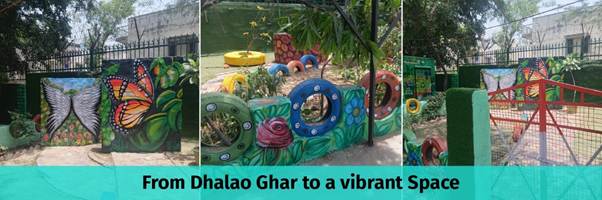
The result is a visible example of the circular economy in practice, showing how materials can be reused creatively instead of being sent directly to landfills.
The selfie point has also become an attraction for students and visitors in the Delhi University area. Its new identity encourages people to engage with the space and reflect on the possibilities of reusing everyday materials.
RRR Centre encourages responsible consumption
A key part of the project is the adjoining RRR Centre, which provides residents with a place to donate unused clothes, books, toys and electronic waste.
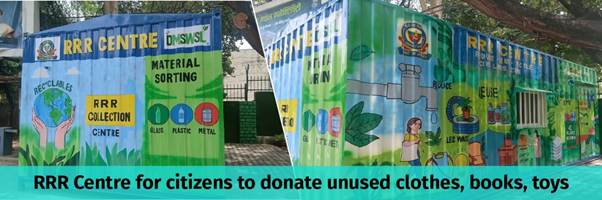
These items are directed towards reuse, refurbishment or responsible recycling, helping extend their useful life and reducing the volume of waste that reaches landfills. The centre also offers a practical way for citizens to participate in waste reduction rather than treating disposal as the only option.
A local model for cleaner cities
The Patel Chest project highlights how urban cleanliness initiatives can go beyond waste collection and disposal. By combining infrastructure reuse, creative design and citizen involvement, the site has been turned into a space that promotes environmental responsibility.
Under Swachh Bharat Mission-Urban 2.0, the transformation reflects the broader goal of encouraging sustainable waste management and building a culture of Reduce, Reuse and Recycle.
What was once a place people passed without notice now serves as a reminder that even neglected urban spaces can be reclaimed—and that materials considered waste can still have value.