Bhubaneswar, June 22 (UDN): Odisha’s school education system is facing mounting challenges as thousands of teaching posts remain vacant and basic infrastructure continues to lag, raising concerns over the quality of education in government schools.
Representational image
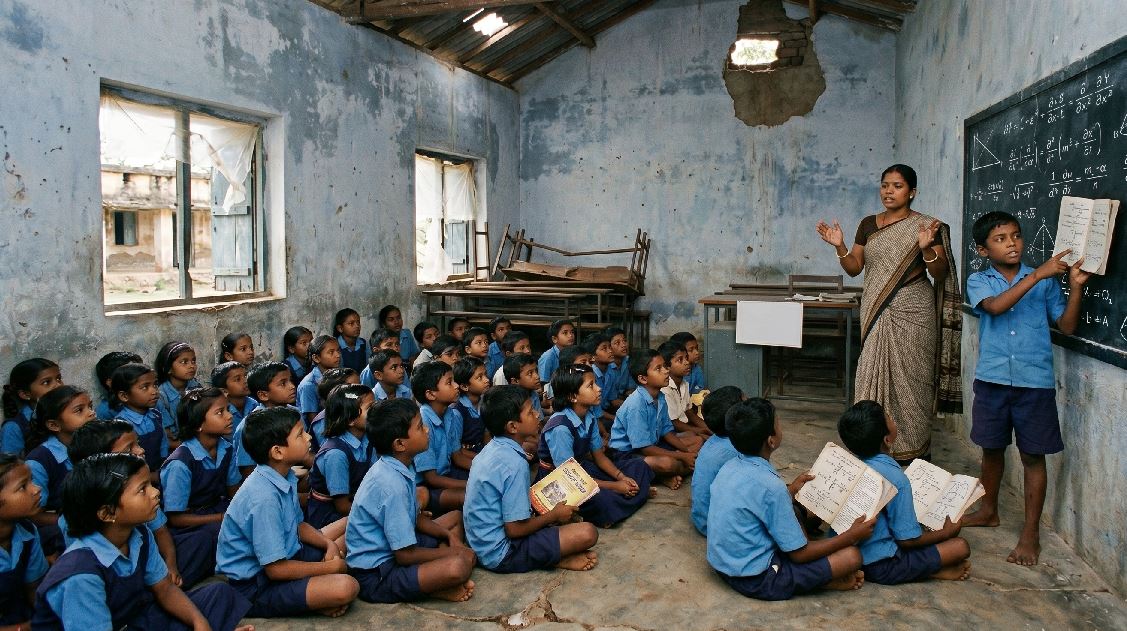
Official data reveal that 1,089 primary and upper primary schools across the state are functioning with just one teacher, affecting the education of more than 47,000 students. In many of these schools, a single teacher is compelled to manage classes from Grade I to Grade VIII, leaving little scope for effective classroom instruction.
The infrastructure scenario is equally alarming. Nearly 1,900 schools have only one classroom, forcing students from different grades to share the same space, with some classes even being conducted in verandas due to a shortage of rooms.
The crisis is further compounded by a massive shortage of teachers. While Odisha has close to 1.5 lakh sanctioned posts in primary and upper primary schools, more than 50,000 positions are currently lying vacant, leaving nearly one in every three posts unfilled.
Amid these challenges, teachers have expressed resentment over the government’s directive asking them to identify and correct errors in school textbooks while continuing regular teaching duties. Teacher organisations argue that educators are already overburdened with a range of non-academic responsibilities, including election work, surveys, census assignments, Aadhaar enrolment, midday meal supervision and enrolment drives.
The controversy gained momentum after a large number of mistakes were detected in school textbooks. According to teacher unions, as many as 1,678 errors have been identified across different classes. Class VIII textbooks account for the highest number of errors at 705, followed by 387 in Class VII and 289 in Class VI. Teachers fear that more errors may still remain unnoticed.
Concerns have also surfaced over the teaching of Hindi, Sanskrit and Urdu in Classes VI to VIII, as many schools lack subject-specific teachers. In several institutions, teachers from unrelated disciplines are being assigned these subjects, while in some cases, the subjects are reportedly not being taught regularly.
Primary School Teachers’ Association president Brahmananda Maharana questioned how teachers, already grappling with acute staff shortages and multiple administrative duties, could be expected to simultaneously rectify textbook errors and ensure quality education. He urged the government to provide error-free textbooks and focus on filling vacant posts to strengthen the state’s education system.