Bhubaneswar, Oct 16: In Odisha, devotion takes many forms, and some of its most fascinating traditions are reflected in the offerings made to Goddess Shakti. While temple prasad is often associated with fruits, sweets and vegetarian delicacies, several Shakti shrines across the state preserve distinctive customs involving fish and other non-vegetarian offerings.
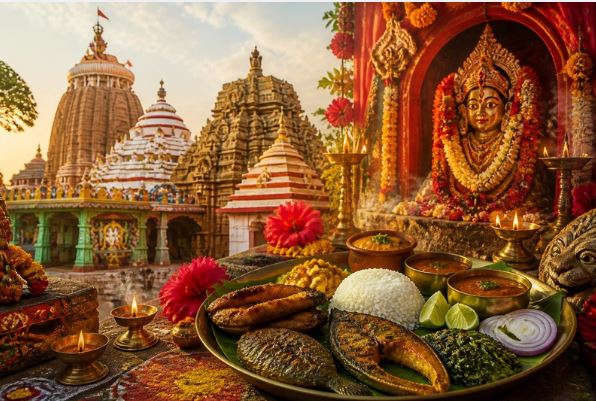
Representational Image
From fish fry at Kakatpur’s Maa Mangala temple to roasted fish at Maa Ugratara’s shrine, these rituals reflect the deep connections between local food traditions, religious beliefs and generations of worshippers.
During Durga Puja, these age-old practices draw devotees eager to witness rituals that distinguish Odisha’s Shakti worship from customs followed at many other temples.
Maa Mangala Temple, Kakatpur: A special fish offering
Located on the banks of the Prachi River, the revered Maa Mangala temple at Kakatpur is known for its distinctive rituals during the Durga Puja period.
From Mulashtami to Mahashtami, a special Sodasa Upachara puja is performed, during which fish fry is offered to Goddess Durga, whose idol is placed beneath Maa Mangala’s idol. According to temple tradition, the offering is made to Goddess Durga rather than Maa Mangala and is presented outside the sanctum.
Temple servitor Samarendra Dixit said the ritual forms part of the shrine’s distinctive festive observances. Fish is prepared by the temple’s traditional cooking servitors, and devotees later receive the offering as prasad.
The period also features special adornments of the goddess and rituals associated with Navapatrika, culminating in Vijayadashami celebrations.
Maa Bimala Temple, Puri: An exceptional Durga Puja ritual
Within the Shree Jagannath Temple complex in Puri stands Maa Bimala’s shrine, where a distinctive tradition is observed during Durga Puja.
Ordinarily, the goddess receives offerings connected with Lord Jagannath’s consecrated food, known as Mahaprasad. During the Durga Puja period, however, special non-vegetarian offerings are made to Maa Bimala as part of the temple’s Shakti worship.
According to temple tradition, fish obtained from the sacred Markanda tank is prepared for the goddess. The ritual also includes the sacrifice of a he-goat before dawn. These offerings are made before the main doors of the Jagannath Temple are opened for the day.
The practice is associated with traditional accounts explaining Maa Bimala’s relationship with Lord Jagannath and her distinctive place within the temple’s religious customs.
Maa Charchika Temple, Banki: Fish fry as a signature offering
At the historic Maa Charchika temple in Banki, Cuttack district, Goddess Charchika is worshipped as a powerful form of Chamunda.
The temple observes an elaborate 16-day period of rituals from Mulashtami to Mahashtami. During the celebrations, the goddess receives different food offerings at designated times.
According to servitor Sudhir Kumar Rana, mandua pitha is offered during the morning ritual, while the second round of offerings includes fish fry alongside khichdi, dalma, leafy greens and khata, a traditional sour preparation.
Fish fry is also a distinctive offering at the shrine beyond the Durga Puja season, making it an enduring part of the temple’s religious identity.
Bhattarika Temple: A tradition linked to fishing communities
Situated at Sasanga village near Badamba in Cuttack district, the Maa Bhattarika temple is another important Shakti shrine known for its distinctive food offerings.
The temple’s rituals include cooked fish offered to the goddess, with non-Brahmin priests traditionally associated with certain ceremonies, particularly during Dussehra.
The custom has a special cultural significance for fishing communities, many of whom revere Maa Bhattarika as a protector associated with navigation and safety.
Local religious tradition also connects the shrine with Parashurama, who is believed to have worshipped the goddess and established her presence at the site.
Maa Ugratara Temple: Poda machha offered to the goddess
Located near Chandpur in Khurda district, the historic Maa Ugratara temple is renowned for its worship of the fierce yet benevolent goddess.
One of its distinctive daily offerings is poda machha, or roasted fish, served with chuda ghasa, a preparation made from flattened rice. During Dussehra, the goddess is also offered jhada besara, a traditional fish curry.
These offerings reflect a local form of Shakti worship in which regional culinary customs remain closely woven into religious observance.
Barahi Temple, Chaurasi: A rare form of divine imagery
The ninth-century Barahi temple at Chaurasi in Puri district adds another dimension to Odisha’s diverse Shakti traditions.
The presiding deity, Matsya Varahi, is depicted with a boar’s face and a divine female body. Her iconography includes a fish and a skullcap, making the image particularly distinctive among the region’s temple sculptures.
The shrine stands out for its religious symbolism and architectural heritage, offering a glimpse into the varied ways divine feminine power has been represented and worshipped in Odisha.
A living heritage of faith and food
Odisha’s Shakti temples demonstrate that religious food traditions are not uniform across the state. In these shrines, offerings such as fish fry, roasted fish and fish curry carry meanings shaped by local beliefs, ritual practices and community histories.
These customs also underline the close relationship between temples and the cultural life of their surrounding communities. Preserved across generations, they remain an important part of Odisha’s diverse spiritual heritage, particularly during the annual celebrations of Goddess Durga.
From Kakatpur to Puri and Banki to Khurda, the traditions surrounding non-vegetarian bhog reveal a lesser-known side of Odisha’s temple culture—one where devotion, regional identity and inherited ritual practices come together.