Bhubaneswar, July 22 (UDN): A comprehensive health assessment conducted by Utkal University has highlighted significant nutritional and health concerns among Odisha’s Particularly Vulnerable Tribal Groups (PVTGs), revealing high levels of anaemia, chronic undernutrition and emerging metabolic risks across several communities.
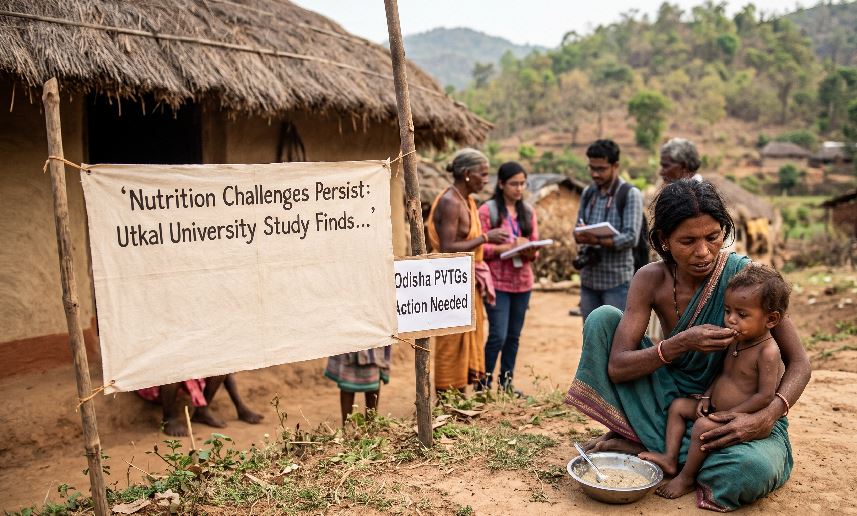
Representational Image
The interdisciplinary study, released on July 20 by Odisha Governor Hari Babu Kambhampati, examined the health and nutritional status of 9,222 individuals from 2,041 households belonging to 10 PVTG communities spread across seven tribal-dominated districts.
More Than Half of Adult Women Anaemic
The findings show that 53 per cent of adult women and 36.95 per cent of adult men surveyed were suffering from anaemia, underscoring the continuing burden of nutritional deficiencies among the state’s most vulnerable tribal populations.
Among men, the highest prevalence of anaemia was recorded in the Mankidia (59.18%) and Bonda (56.30%) communities, followed by Lodha (47.32%) and Lanjia Saora (39.26%).
Researchers attributed the widespread anaemia to poor dietary diversity, inadequate iron intake, recurrent infections and parasitic infestations. The report recommends targeted nutrition interventions, improved access to healthcare and strengthened screening programmes in remote tribal areas.
Adolescents Face Chronic Undernutrition
The study also paints a concerning picture of adolescent nutrition.
More than 50.74 per cent of adolescent girls surveyed were found to be stunted, indicating long-term nutritional deprivation. The highest rates were observed among the Hill Kharia (82.76%), Paudi Bhuiya (72.73%) and Juang (53.49%) communities.
Researchers stressed the need for school-based nutrition initiatives, regular anaemia screening and reproductive health education to improve adolescent health outcomes.
Among adolescent boys, 30.88 per cent were classified as underweight or thin, reflecting acute undernutrition. The highest prevalence was recorded among Didayi (48.15%), Lodha (44.74%), Hill Kharia (40%) and Bonda (36%) communities.
Early Signs of Lifestyle Diseases
While undernutrition remains a major concern, the report also points to the emergence of non-communicable disease risks. Blood pressure and random blood sugar assessments indicated early signs of metabolic disorders among sections of the surveyed population, suggesting that these communities are experiencing a dual burden of malnutrition and lifestyle-related health risks.
Researchers described the overall health profile as a complex interaction of persistent undernutrition, changing lifestyles and limited access to quality healthcare.
Survey Covered 10 Tribal Communities
The assessment covered 10 of Odisha’s 13 Particularly Vulnerable Tribal Groups—Bonda, Didayi, Dongria Kandha, Kutia Kandha, Juang, Paudi Bhuiya, Hill Kharia, Mankidia, Lodha and Lanjia Saora.
Fieldwork was conducted across Malkangiri, Rayagada, Kandhamal, Keonjhar, Deogarh, Mayurbhanj and Gajapati districts, which have sizeable PVTG populations.
Experts Call for Tailored Interventions
Utkal University Vice-Chancellor Chandi Prasad Nanda said the findings provide policymakers with evidence-based insights into the health status and developmental needs of Odisha’s PVTGs.
Prasanna Kumar Patra, Coordinator of the Centre of Excellence in Studies on Tribal and Marginalised Communities (CoE-STMC), noted that the high prevalence of anaemia among women, widespread childhood stunting and the fact that nearly 59 per cent of deliveries still occur at home indicate persistent gaps in maternal and nutritional healthcare services.
ICMR-RMRC scientist Subhendu Kumar Acharya emphasised that development strategies for PVTGs should be community-specific and culturally sensitive, rather than relying on uniform interventions, to effectively address the distinct health challenges faced by different tribal groups.