Rourkela, Sept. 7 (UDN): The National Institute of Technology (NIT) Rourkela has entered into a tripartite agreement with the National Remote Sensing Centre (NRSC) of the Indian Space Research Organisation (ISRO) and Tea Board India to develop artificial intelligence and geospatial technologies for monitoring tea plantations.
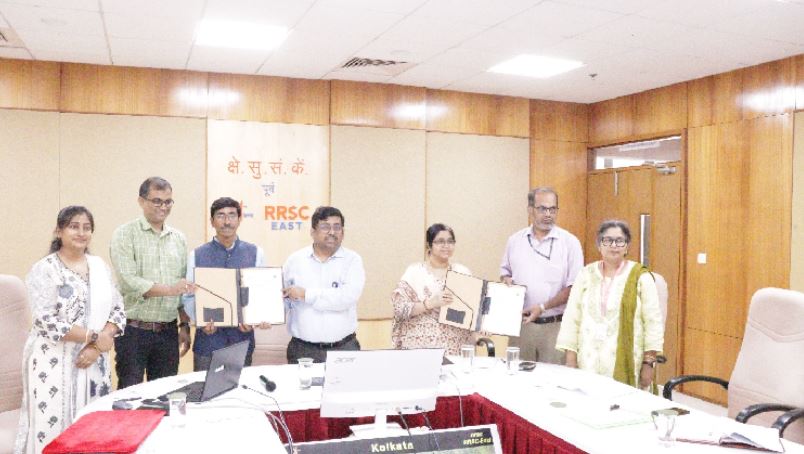
The Memorandum of Understanding (MoU) was signed at the Regional Remote Sensing Centre (RRSC-East), NRSC, in Kolkata on August 27 as part of the three-year research project titled “CHAYANKAN: Comprehensive AI-based Geospatial Data Analytics for Tea Plantation Monitoring.”
The project, which began in April 2026, aims to develop technology-driven solutions for mapping tea plantations, estimating crop yields and predicting the occurrence of pests and diseases.
Researchers will integrate satellite imagery and data collected through unmanned aerial vehicles (UAVs) with field-level observations. Advanced machine learning techniques and modelling will then be used to analyse the data and generate actionable insights.
The initiative is expected to improve scientific assessment of tea plantation health and productivity while helping stakeholders make timely, evidence-based decisions.
The MoU signing ceremony was attended virtually by NRSC Director Dr Prakash Chauhan and NIT Rourkela Director Prof K. Umamaheshwar Rao. Tea Board India Director (Tea Development) S. Soundararajan attended the programme in person.
Dr Sushil Kumar Srivastav, Associate Director and Chief General Manager (Regional Centres), NRSC, ISRO; Dr Amrita Chakraborty, Secretary, Tea Board India; and Prof Saurav Chatterjee, Dean (SRICCE), NIT Rourkela, signed the agreement on behalf of their respective organisations.
Scientists and senior officials from all three institutions were present during the programme. Dr Arati Paul, Principal Investigator from RRSC-East, along with Co-Principal Investigators Dr Anima Biswal, J. Nalini and Dr Anup Nandy of NIT Rourkela, presented details of the CHAYANKAN project.
The collaborating institutions highlighted the potential of combining remote sensing, artificial intelligence and geospatial technologies to address challenges facing the tea sector.
The research is expected to provide better insights into plantation conditions, improve productivity assessment and facilitate early forecasting of pest and disease outbreaks.
The collaboration marks a significant step towards strengthening technology-based research in the tea sector and bringing advanced digital tools into plantation management.