New Delhi, Oct 27: The Centre has amended the Central Motor Vehicles Rules to provide a regulatory framework for E100 and E85 fuels in compatible vehicles, marking a significant step towards promoting high-ethanol fuel technology in India.
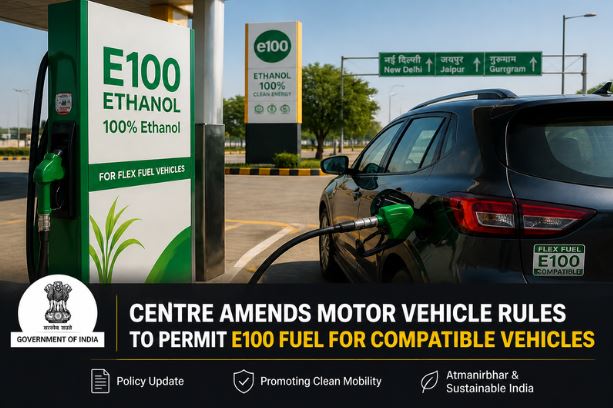
Representational Image
The Ministry of Road Transport and Highways (MoRTH) has introduced the amendments to establish the necessary regulatory provisions for vehicles designed to operate on high-ethanol fuel blends. The move is expected to support the development and introduction of flex-fuel vehicles in the Indian automobile market.
E100 is an ethanol-based fuel containing approximately 100 per cent ethanol, while E85 consists of approximately 85 per cent ethanol blended with other fuel components. Ethanol can be produced from agricultural feedstocks, including sugarcane, offering potential opportunities to strengthen domestic biofuel production.
The revised regulatory framework is expected to provide greater clarity for automobile manufacturers regarding the development, testing and certification of vehicles capable of using high-ethanol fuels.
However, E100 is not suitable for all petrol-powered vehicles. Its use is restricted to vehicles specifically designed and certified for the fuel. Owners of conventional petrol vehicles, including those compatible with E20, should not use E100 unless their vehicle manufacturer explicitly confirms compatibility.
The initiative aligns with India’s broader efforts to diversify its energy sources, reduce dependence on imported crude oil and promote the domestic biofuel sector. Increased ethanol production could also create opportunities for agricultural producers and related industries.
Despite the regulatory development, the widespread availability of E100 at fuel stations will depend on the development of distribution infrastructure, fuel supply and the introduction of compatible vehicles.
The amendment represents a step towards expanding India’s alternative-fuel ecosystem, although its impact on consumers will depend on vehicle compatibility, fuel pricing and market availability.