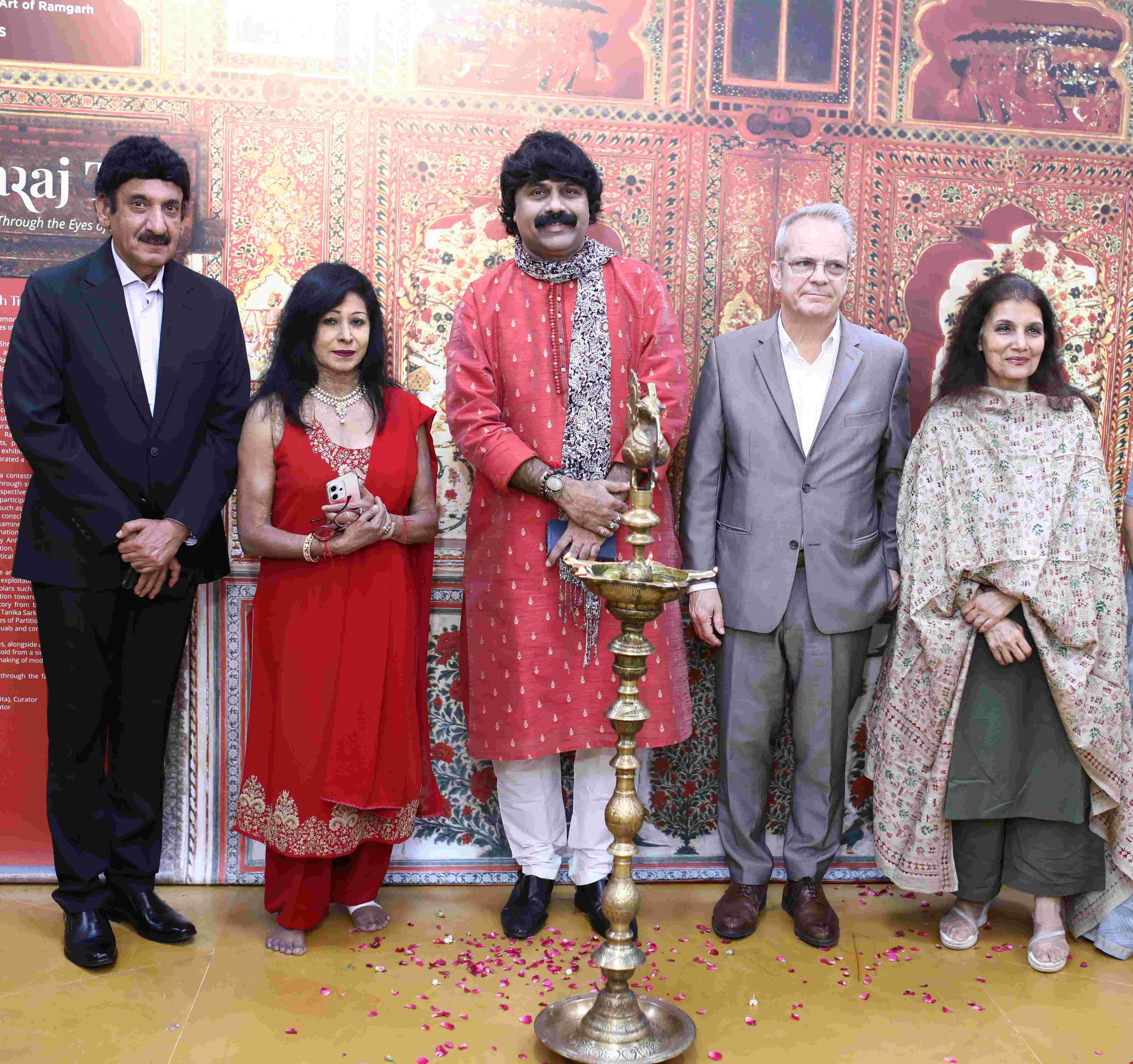
New Delhi, Sept 25: MOHAR (Museum of Heritage and Art at Ramgarh), an initiative of Shruti Foundation, inaugurated ‘Raj Se Swaraj Tak – From Colonial Rule to Independent India, through the Eyes of Shekhawati’ on September 23rd, 2026, at the Visual Arts Gallery, India Habitat Centre, Lodhi Road, New Delhi. The eight-day exhibition, marking India’s 80th year of Independence, will remain open to visitors until September 30th, 2026.
Curated by Dr. Shruti Nada Poddar and co-curated by Dr. Alka Pande, the exhibition presents 10 distinct journeys through Shekhawati, exploring the region during the British Raj, the freedom movement and the 80 years since Independence.
The exhibition was inaugurated in the presence of Dr. Tim Curtis, Regional Head of UNESCO for South Asia, who was the Chief Guest. The launch brought together Raja Rama Varma, descendant of Raja Ravi Varma; Padmashri Guru Shovana Narayan, IAS Retd, Chairperson, Shruti Foundation and renowned performing artist; Ravindra Singh, Member Secretary, INTACH; Abha Dalmia, Shekhawati diaspora and entrepreneur; Tarun Thakral, Trustee, Shruti Foundation and Founder, Heritage Transport Museum, Vocalist Sunanda Sharma, Classical Singer and Dr. Rama Pandey (Author, Playwright and Theatre Personality) among others.
Shekhawati is often described as the ‘Open Air Art Gallery of Rajasthan’ because of its remarkable frescoed havelies. However, beyond their artistic and architectural significance, these havelies also preserve stories of the people who built them and the changing social, cultural and economic influences that shaped their lives.
‘Raj Se Swaraj Tak’ brings together these diverse narratives to explore Shekhawati during the British Raj, the freedom movement and the decades following Independence. The exhibition offers a glimpse into how changing times were reflected in the region’s art, architecture, objects, documents and everyday life.
The display draws from the MOHAR Museum collections and Dr. Shruti Nada Poddar’s extensive personal collections, featuring art, manuscripts, telegrams, newspapers, letters, maps, oleographs including the Raja Ravi Varma Collection, Manchester textile labels, old messages, coinage, currency, games, freedom-related photographs and other historical objects.
Together, these materials reveal the interaction of Indian and foreign influences that shaped the country and offer glimpses into the freedom struggle and the making of a new India. The exhibition also highlights the significant role played by the merchant communities of Rajasthan in the freedom movement and in the development of independent India.
Speaking about the exhibition, Dr. Tim Curtis, Regional Head of UNESCO for South Asia, said, “I think this exhibition really demonstrates the richness of this region, the Shekhawati region in Rajasthan. I was lucky to visit the region in January, and I was really taken aback not only by the impressive architectural dimension of the towns, but also, as you can see here, by all the art and associated art, the murals, the technology and the fascination with technology that you can see. The wealth that was there really comes through.”
Dr. Shruti Nada Poddar, Curator of ‘Raj Se Swaraj Tak’ and Founder of MOHAR (Museum of Heritage and Art at Ramgarh), said, “Shekhawati has always been seen for its beautiful frescoes, but there is so much more to discover in the stories surrounding these havelies. ‘Raj Se Swaraj Tak’ brings together different aspects of the MOHAR collection to look at the region through its unique history, art, objects and archival material. It allows us to see how the people of Shekhawati experienced a changing India and how that change found its way into their homes, their walls and their lives, and indeed how the Shekhawati diaspora in India and abroad have shaped India as a global power today.”
Dr. Alka Pande, Co-curator and Director, Visual Arts Gallery, said, “Shekhawati is a remarkable visual archive of a changing India. Its frescoes, architecture and objects capture the meeting of tradition with new ideas and influences. ‘Raj Se Swaraj Tak’ brings these layers together to view Shekhawati as a reflection of India’s own journey.”
The exhibition is open to visitors from September 23rd to 30th, 2026, from 11 am to 8 pm, at the Visual Arts Gallery, India Habitat Centre, Lodhi Road, New Delhi.