Mumbai, Aug 11: Every day, across millions of Indian kitchens, someone rinses fruits and vegetables under running water and believes that is enough. But the concern may not simply wash away. India consumes more than 50,000 metric tonnes of chemical pesticides annually, and regular water rinsing does not remove pesticide residues from fresh produce. This matters because prolonged exposure to certain pesticides has been associated with serious chronic health effects, including an increased risk of certain cancers.
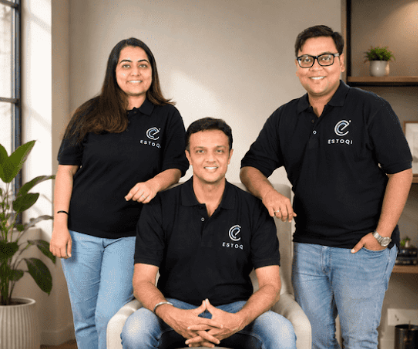
ESTOQI is addressing this overlooked food-safety gap with ESTOQI Wash, an institutional platform engineered specifically to reduce pesticide residues from fresh produce before they reach the plate.
“We didn’t build ESTOQI because pesticide residue is a talking point; we built it so that families could eat with greater peace of mind,” said Jesal Sunil Desai, Founder and Chief Innovator of ESTOQI. “Somewhere, right now, a mother is asking her child, ‘What did you eat today?’ She may never see what happened behind the scenes. But whether a meal is served to a child at school, a patient in a hospital, or an employee at work, they should be able to trust the care and processes behind it.”
Validated through an NABL-accredited laboratory, ESTOQI Wash removes up to 99% of surface pesticide residue, reduces microbial load by up to 95%, and extends shelf life by up to 2.2 times, figures that place it well beyond what any consumer-grade wash, home remedy, or ozone-based rinse has demonstrated at institutional volume. Having conducted 100+ tests through independent NABL-accredited laboratories, ESTOQI believes in vouching for measurable scientific authentication. Estoqi wash has demonstrated up to 99% removal of harmful pesticides, like chlorpyrifos, monocrotophos, profenofos, thiamethoxam, imidacloprid, lambda-cyhalothrin, propargite, and paclobutrazole, among others, from the fresh produce. Notably, Estoqi has been recognized by Startup India and DPIIT and is registered as an MSME.
“This is not an incremental improvement on washing produce. It’s a category that didn’t exist before,” said Vidhi Jesal Desai, co-founder of ESTOQI. “We built the science first, carried out multiple tests, and only then decided it was ready to carry the weight of a promise this big. What matters to us is that India deserves to eat better and safe produce without any fear,” added Jesal Desai. ESTOQI’s technology is designed to work quietly behind the scenes of India’s institutional food ecosystem across commercial kitchens, hospitals, educational institutions, hotels, fresh-produce processors, and quick-commerce supply chains that feed millions of people every day. Consumers may never see the wash cycle, but they can benefit from the additional step taken before fresh produce reaches them. Built for integration into high-volume operations, ESTOQI Wash gives food businesses a scalable way to strengthen produce-washing protocols and demonstrate a deeper commitment to food safety and quality. ESTOQI now plans to partner with institutions and food-supply platforms across India to help make enhanced produce washing a standard institutional practice.
With ESTOQI Wash, ESTOQI is setting a new benchmark for food safety innovation in India. As demand for safer and higher-quality food grows, ESTOQI remains committed to developing solutions that support the evolving needs of the food industry.