Kalidas ka Kathalok, a two-day cultural festival curated by Samay Yaan in collaboration with IGNCA, concludes at Purana Qila, New Delhi
New Delhi, Feb 10: Delhi witnessed a rare cultural immersion into India’s ancient civilisational consciousness as Kalidas ka Katha Lok, a two-day cultural festival curated by Samay Yaan in collaboration with the Indira Gandhi National Centre for the Arts (IGNCA), concluded successfully at Purana Qila on 7–8 February 2026.
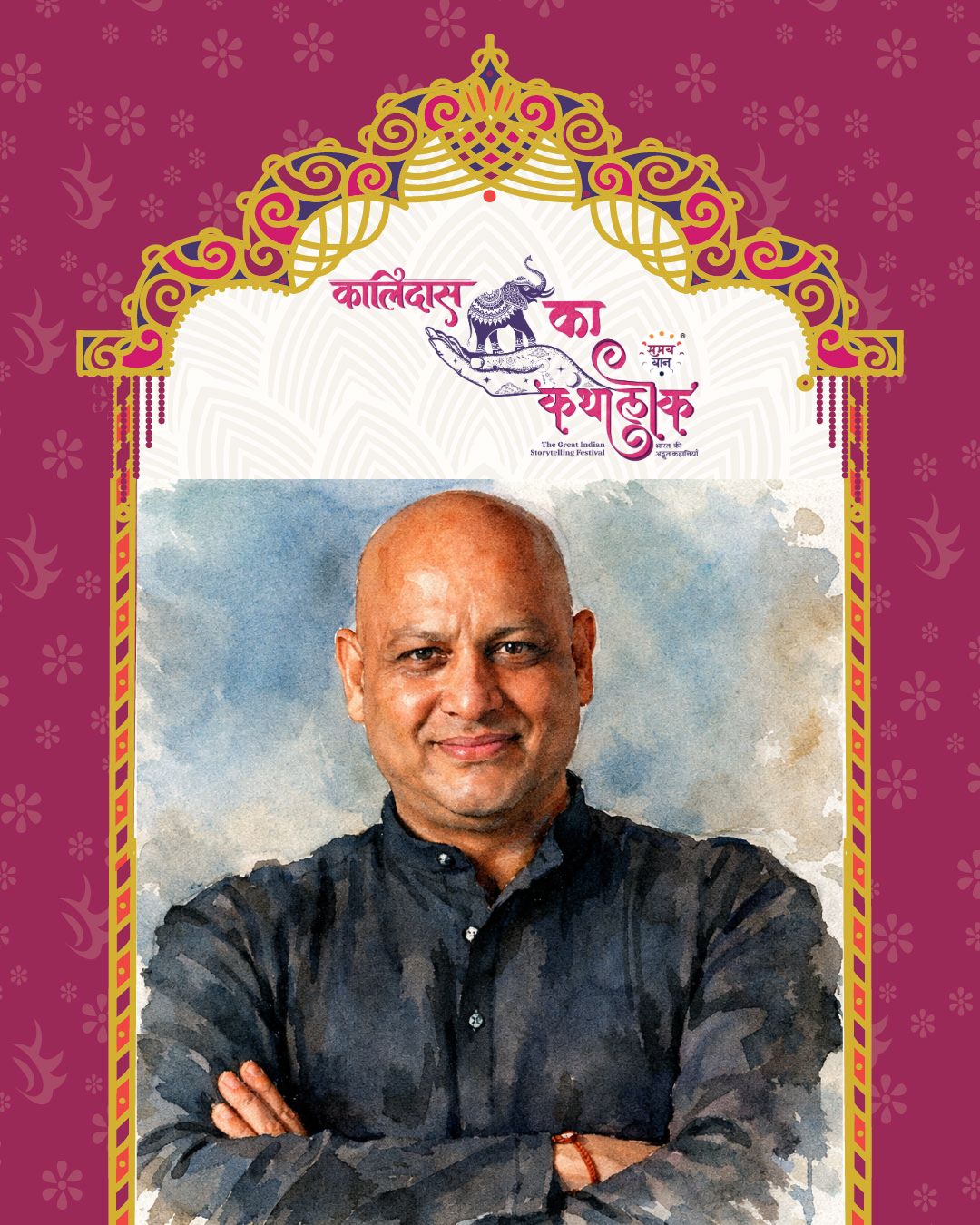
Rooted in the theme “Kalidas and His India,” the festival invited audiences to experience the world of Mahakavi Kalidas not as distant history, but as a living, breathing continuum of ideas, aesthetics, and social thought. Over two days, thousands of visitors, students, scholars, artists, and families engaged with India’s classical heritage through theatre, music, storytelling, workshops, installations, and scholarly dialogue.
The festival was inaugurated by Shri Kapil Mishra, Hon’ble Minister of State for Language, Culture and Tourism, along with Dr. Sachchidanand Joshi, Member Secretary, IGNCA; Justice (Retd.) S. N. Dhingra, Founder of Samay Yaan; Dr. Sandhya Purecha, Chairperson, Sangeet Natak Akademi; and Shri Chittaranjan Tripathi, Director, National School of Drama.
Held within the historic landscape of Purana Qila, the festival transformed the venue into a symbolic passage into the India of nearly 2,000 years ago. Visitors were welcomed with immersive entry experiences, thematic décor, poetic installations, and curated experiential zones that evoked everyday life, trade, art, and learning from Kalidas’s era.
The festival was graced by several dignitaries including Dr. Sachchidanand Joshi – Member Secretary, IGNCA; Dr. Sandhya Purecha – Chairperson, Sangeet Natak Akademi; Prof. Ranjana Aggarwal – Founder Director of CSIR-NIScPR; Shri Sudhanshu Trivedi – Member of Parliament; Prof. Kapil Kumar – historian and author; Capt. Praveen Chaturvedi – CEO of Prachyam Studios; and Sushri Bharti Dixit, storyteller.
Speaking at the event, Justice (Retd.) S.N. Dhingra, Chairman, Samay Yaan, said,
“Kalidas ka Kathaalok is our attempt to bring ancient India out of textbooks and make it a live experience. We are not recreating history as a spectacle, but opening a space where stories, ideas, and emotions from 2000 years ago can be felt again. By combining performance, craft, music, and conversation, the festival allows people, especially young audiences, to engage with Kalidas and his world and feel the vibrant Bharat of his era.”
Ms. Bharti Dhingra, Project Head – Katha Lok, said,
“This festival is built around listening to stories, to places, and to the questions ancient India was curious about: love, power, nature, and society. Kalidas ka Kathaalok does not tell audiences what to think about the past. Instead, it creates the atmosphere that allows reflection and dialogue.”
Shri Chittaranjan Tripathy, Director, National School of Drama, said,
“At the National School of Drama, we believe theatre is one of the most powerful ways to understand society and history. Through Kalidas ka Kathaalok, we are engaging with young performers and storytellers to explore life in ancient India, not as mythology, but as a living reality. This festival gave opportunity and chance to express and reinterpret classical themes through contemporary performance, ensuring that Indian dramatic traditions continue to grow, evolve, and speak to new generations.”
Shri Sachchidanand Joshi, Member Secretary, IGNCA, said,
“To envision a literary festival devoted to Mahakavi Kalidasa is an inspired endeavour. Kalidasa enriched literary traditions through the vast reach of his genius. Our youth readily know Shakespeare, yet remain largely unaware of Kalidasa. This moment calls for reintroducing Kalidasa to the new generation, so they may engage with and take pride in our rich literary heritage.”
Pandit Abhay Sopori, Santoor Maestro & Music Composer, said,
“Indian classical arts have always carried history not as memory alone, but as lived experience. Kalidas ka Kathaalok created a rare space where poetry, music, and thought come together to awaken that continuity. Just as a raga unfolds emotion beyond words, this festival allows ancient ideas to resonate with contemporary sensibilities. It reminds us that our cultural inheritance is not something to be preserved in silence, but to be listened to, felt, and rediscovered by every generation.”
One of the festival’s key highlights was its experiential haat, where audiences explored ancient Indian practices, from attar-making and traditional board games to Brahmi script calligraphy, dhoti-tying, and forgotten culinary and craft traditions. These hands-on spaces enabled visitors to engage with civilisation through touch, scent, sound, and movement, rather than observation alone.
The intellectual core of Kalidas ka Katha Lok was anchored by curated conversations and storytelling sessions featuring eminent thinkers, historians, authors, and cultural practitioners. Discussions explored themes such as ancient Indian trade routes, governance systems, science, philosophy, aesthetics, and the enduring relevance of Kalidas’s literary imagination in contemporary times.
The performing arts formed a powerful narrative arc across both evenings. A specially curated National School of Drama production on the life and works of Mahakavi Kalidas brought classical literature alive through contemporary theatrical expression.
The much-anticipated Taal Yudh witnessed master percussionists engage in a rhythmic dialogue across traditions, reviving India’s ancient language of rhythm and conversation.
Musical reinterpretations of Kalidas’s works found expression through The Kalidas Bands, an inter-college competition that blended classical and folk traditions with modern musical sensibilities.
The festival concluded with Sur Samay Yaan, a grand musical journey mapping India’s sonic evolution, from the earliest philosophical conception of sound to classical and folk traditions, performed by a large ensemble of renowned musicians and vocalists including Pandit Abhay Sopori, Smt. Ragini Rainu, Dr. Avinash Kumar, Dr. Rindana Rahasya, Pt. Dr. Samit Mallick, and Shri Nitin Sharma.