Bhubaneswar, Oct 24: Odisha’s ambitious luxury Eco-Retreat tourism programme has come under scrutiny after a report by the Comptroller and Auditor General (CAG) of India highlighted a staggering net loss of ₹207.68 crore between 2019 and 2024. The findings have raised serious questions about public spending, tourism planning and the financial sustainability of the state’s flagship glamping initiative.
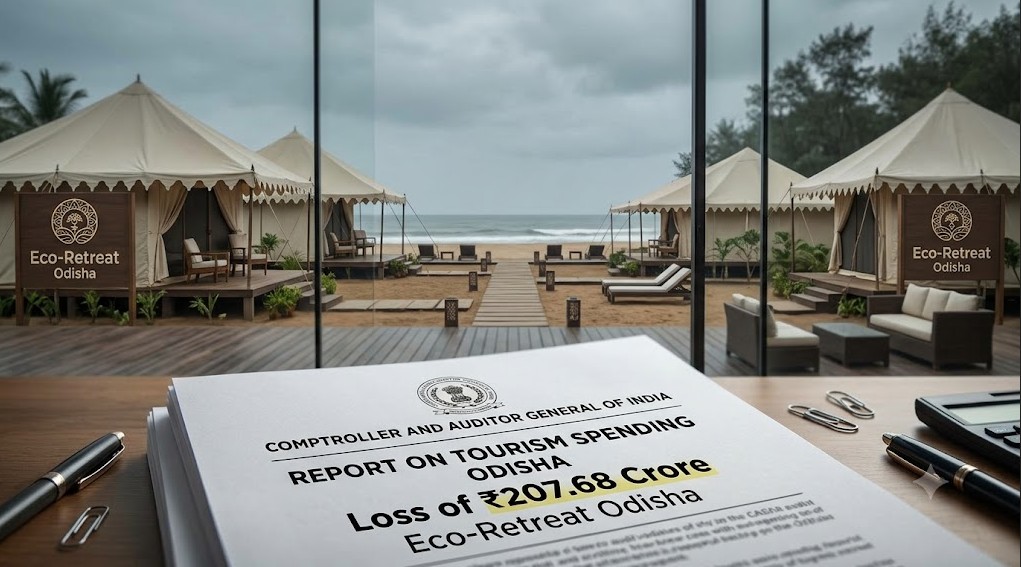
Representational Image
Designed to promote Odisha’s natural beauty and attract tourists to lesser-known destinations, the Eco-Retreat programme expanded from a single location to seven sites during the five-year period. However, the rapid expansion in infrastructure and expenditure did not translate into comparable revenue, exposing significant gaps in the project’s operational and financial performance.
Expenditure Far Exceeds Revenue
According to the figures cited in the audit-related reports, the programme incurred a total expenditure of ₹234.24 crore while generating revenue of approximately ₹26.56 crore.
The resulting deficit of ₹207.68 crore has triggered concerns over whether the scale of public investment was justified by the actual demand for luxury tent-based accommodation.
The figures reveal a substantial gap between the programme’s spending and its earnings, raising questions about occupancy rates, operating costs, pricing strategies and the effectiveness of promotional activities.
Low Occupancy and Operational Challenges
The audit findings point to several shortcomings that may have affected the programme’s performance.
One of the major concerns was low occupancy, with reported average levels falling to around 14 per cent in some assessments. Such limited demand would have made it difficult for the retreats to recover their substantial operating and infrastructure costs.
Operational problems, including electricity fluctuations at remote locations, reportedly affected the quality of the guest experience. Concerns over food quality provided by private vendors also highlighted the need for stronger service standards and monitoring.
In addition, questions have been raised about the effectiveness of marketing efforts. Despite spending on consultants and promotional campaigns, the programme appears to have struggled to attract sufficient visitors, particularly outside peak tourism periods.
Premium Pricing, Limited Demand
The Eco-Retreat initiative was positioned as a premium tourism experience, with accommodation prices reportedly reaching ₹22,000 per night at certain locations.
While the concept aimed to attract high-spending travellers, the pricing structure may have limited its appeal among domestic tourists seeking affordable holiday options. Remote locations, accessibility challenges and inconsistent facilities may also have influenced travellers’ choices.
The experience highlights the importance of aligning accommodation prices with customer demand, location-specific advantages and the quality of services offered.
A Debate Over Tourism Policy
The reported losses have intensified debate over the state’s approach to tourism development.
Critics argue that greater emphasis should have been placed on market research, phased expansion and financial viability before committing substantial public funds. They also suggest that investment in local homestays, affordable accommodation, transport connectivity and community-based tourism could help distribute economic benefits more widely.
Supporters of destination-development initiatives, however, may argue that tourism projects in relatively unexplored regions require initial investment to build infrastructure, generate awareness and attract future private investment. Such benefits, they contend, may not be fully reflected in short-term revenue figures.
Nevertheless, the scale of the reported deficit underscores the need for transparent performance assessments and measurable outcomes.