Bhubaneswar, Oct 14 (UDN): Odisha has conducted more than 1.40 lakh village- and ward-level awareness meetings in nine weeks under the Intensified Information, Education and Communication (IEC) Campaign 3.0 to raise awareness about reproductive tract infections (RTIs) and sexually transmitted infections (STIs).
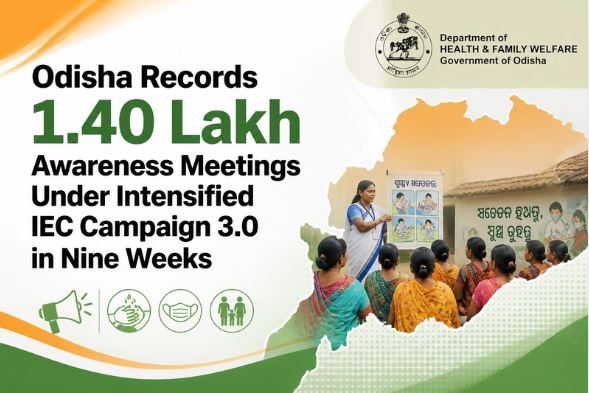
Representational Image
According to the Health and Family Welfare Department, the statewide campaign has made significant progress in reaching communities, educational institutions and households with information on infection prevention, early detection and treatment.
The campaign is being implemented jointly by the National AIDS Control Organisation (NACO), the Odisha State AIDS Control Society (OSACS) and the District AIDS Prevention and Control Units (DAPCUs).
Over 5,600 Villages and Wards Covered in Ninth Week
During the ninth week of the campaign alone, awareness meetings were organised in more than 5,600 villages and wards across Odisha. In addition, over 1,500 schools and colleges conducted awareness and sensitisation programmes for students.
The campaign also reached more than 31,500 families through social contact meetings, providing opportunities for direct community engagement on RTI/STI-related issues.
Cumulative Outreach Crosses Major Milestones
The campaign’s cumulative achievements during the first nine weeks highlight the scale of its outreach across the state.
More than 1.40 lakh village- and ward-level awareness meetings have been organised so far, while over 1.30 lakh schools and colleges have covered students through awareness programmes. Additionally, more than 80,000 families have been sensitised through direct social engagement.
These activities are intended to improve public understanding of RTIs and STIs, promote preventive practices and encourage people to seek timely medical advice and treatment.
Focus on Prevention and Early Detection
The Intensified IEC Campaign 3.0 aims to strengthen health communication at the grassroots level by taking information directly to communities, educational institutions and households.
Through awareness meetings and sensitisation drives, the initiative seeks to address gaps in knowledge about infection prevention, early identification of symptoms and access to appropriate healthcare services.
The campaign’s continued implementation is expected to reinforce community participation and encourage informed health-seeking behaviour across Odisha.