Gurugram, Sep 22: Samsung Research Institute-Noida is contributing to health and wellness capabilities on the Galaxy Watch9 and Galaxy Watch Ultra2, while testing wearable software under Indian conditions. SRI-N also works on services that connect Samsung Health with India’s digital health ecosystem, aligning with the government’s Ayushman Bharat Digital Mission initiative.
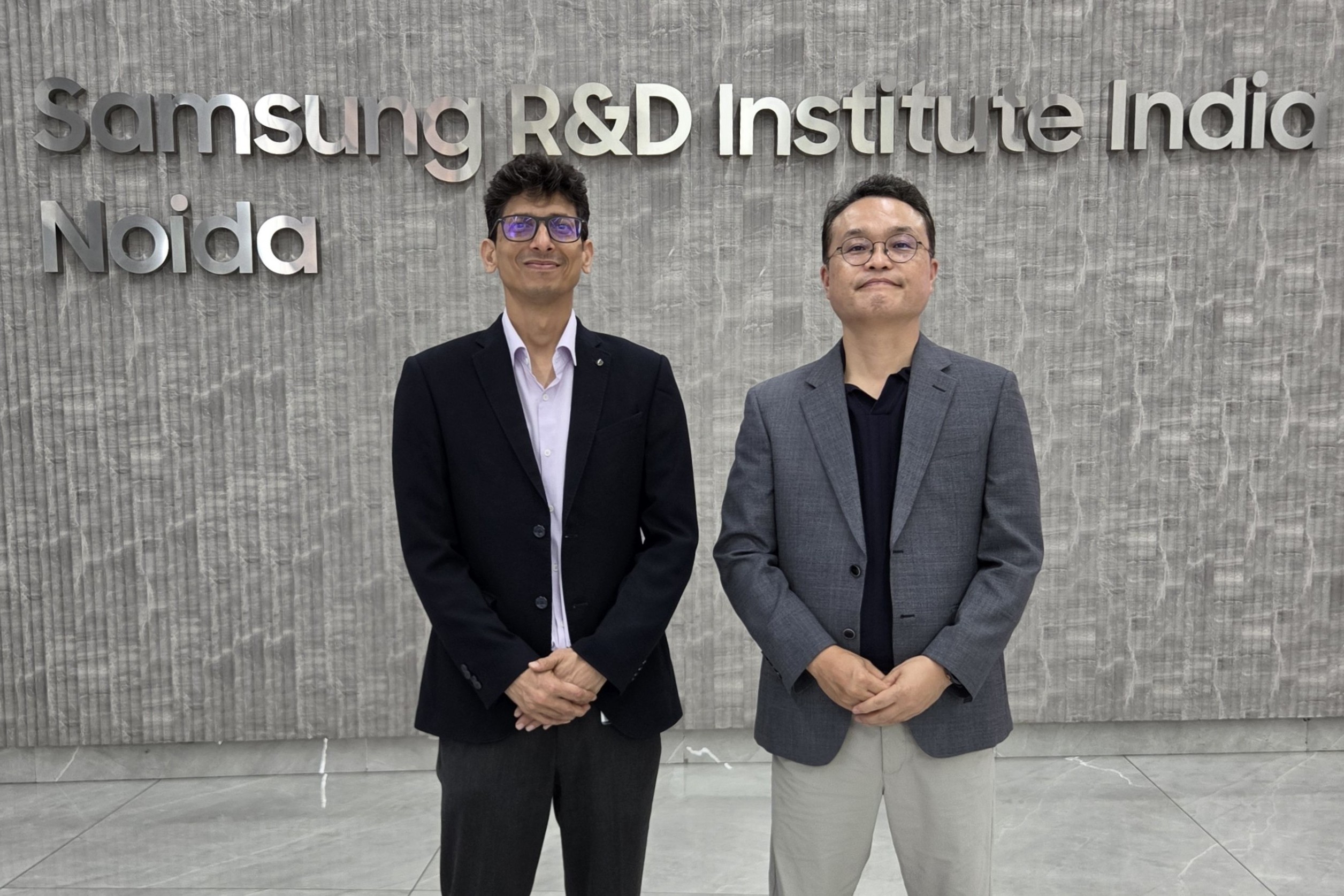
“Digital health, including watch-related features, is a key focus area,” said Kyungyun Roo, Managing Director, Samsung Research Institute-Noida. “Over the past three to four years, we’ve launched India-specific services,” he added.
SRI-N was established in 2007 and works in collaboration with Samsung’s global R&D organisations across Galaxy mobile devices, wearables, tablets and software development. For Galaxy Watch users, the localised work translates sensor data into health and wellness insights through Samsung Health.
“Our platform connects wearable data with smartphones and supports capabilities across activity, sleep, nutrition, mindfulness and vital health indicators,” said Dr Amitabh Thapliyal, Vice President, Service Development, Samsung Research Institute-Noida. “We also contribute to health-tracking applications focused on wellness and preventive care.”
Researched & Tested in India
The centre’s work includes contributions to Galaxy Watch9 and Galaxy Watch Ultra2 capabilities such as Vital Tracker, Daily Cardio Load, Hearing Health and Trail Running.
Vital Tracker measures heart rate, heart-rate variability, skin temperature, respiratory rate and blood oxygen during sleep. When measurements move outside a user’s usual range, the system provides explanations and recommendations. Daily Cardio Load combines activity and recovery data, including sleep, to give users a more personalised view of exercise intensity. Trail Running provides navigation and uphill guidance, while hydration alerts use information about sweat during a trail to prompt users to drink water.
But SRI-N’s India role extends beyond developing software for these features. The centre conducts user trials and validates software under local conditions to identify issues that do not emerge in other markets. One example involved auto-cycle detection. During testing in India, the system initially interpreted movement from auto-rickshaws travelling on bumpy roads as bicycle rides. Indian engineers investigated the false positives and refined the algorithm.
“When we design and architect our solutions, we also consider demographic profiles and regional behaviours to ensure our software meets diverse needs,” Dr Thapliyal said. The work has also contributed to Samsung’s global products. “Our R&D engineers in India enhanced our sensor technology, and these improvements were incorporated into the global product,” he added. This gives SRI-N a dual role: developing technology for Samsung’s global portfolio while testing it against conditions and behaviours found in India.
Developed for India
The centre has also developed an India-specific connected health ecosystem around Samsung Health. Its work includes an ABDM-compliant health record developed with Eka Care, medication tracking with Tata 1mg, and Find Care services with Tata 1mg and PharmEasy for doctor consultations, medicine orders and lab-test bookings.
The ABDM integration is designed to give users greater control over their digital health records. With user consent, health records can be shared with ABDM-compliant healthcare providers. Find Care also connects consultations, prescriptions, medicine orders and lab tests within Samsung Health. For example, a consultation can generate a digital prescription. Samsung Health then uses AI to extract medication information and feed it into the Medication Management tracker. The resulting information can be stored in the user’s health record and, through ABDM integration, in the user’s Ayushman Bharat Health Account. Medication schedules can also continue through the Galaxy Watch.
“Find Care, integrated into the Samsung Health application, facilitates this process by enabling users to connect with doctors for consultations directly through the platform,” Dr Thapliyal said.
Samsung’s focus is on using health data to provide personalised recommendations that can help users make informed decisions about their wellbeing. The approach reflects SRI-N’s software-led R&D role. “We are developing personalised intelligence that empowers users to improve their health and well-being,” Dr Thapliyal said.
For SRI-N, the work illustrates how R&D conducted in India can contribute to Samsung’s global products while also addressing specific requirements of Indian consumers. “We recognise the exceptional talent in India and aim to leverage it for Samsung Health and the AI domain,” Roo adds.
For Samsung, the India contribution therefore operates at several levels. Engineers develop health software for global Galaxy products. Local testing exposes real-world conditions that can improve global algorithms. At the same time, India-specific services connect Samsung Health to the country’s digital healthcare infrastructure. The Galaxy Watch is at the centre of that system: Capturing health signals, presenting personalised insights and, increasingly, helping users move from awareness to action.