Berhampur, Belaguntha, July 20 (UDN): A group of women from Palakasandha village in Odisha’s Ganjam district is proving that traditional craftsmanship can become a sustainable source of income. By reviving the region’s unique brass fish craft, the women have not only preserved a fading art form but also created a pathway to financial independence.
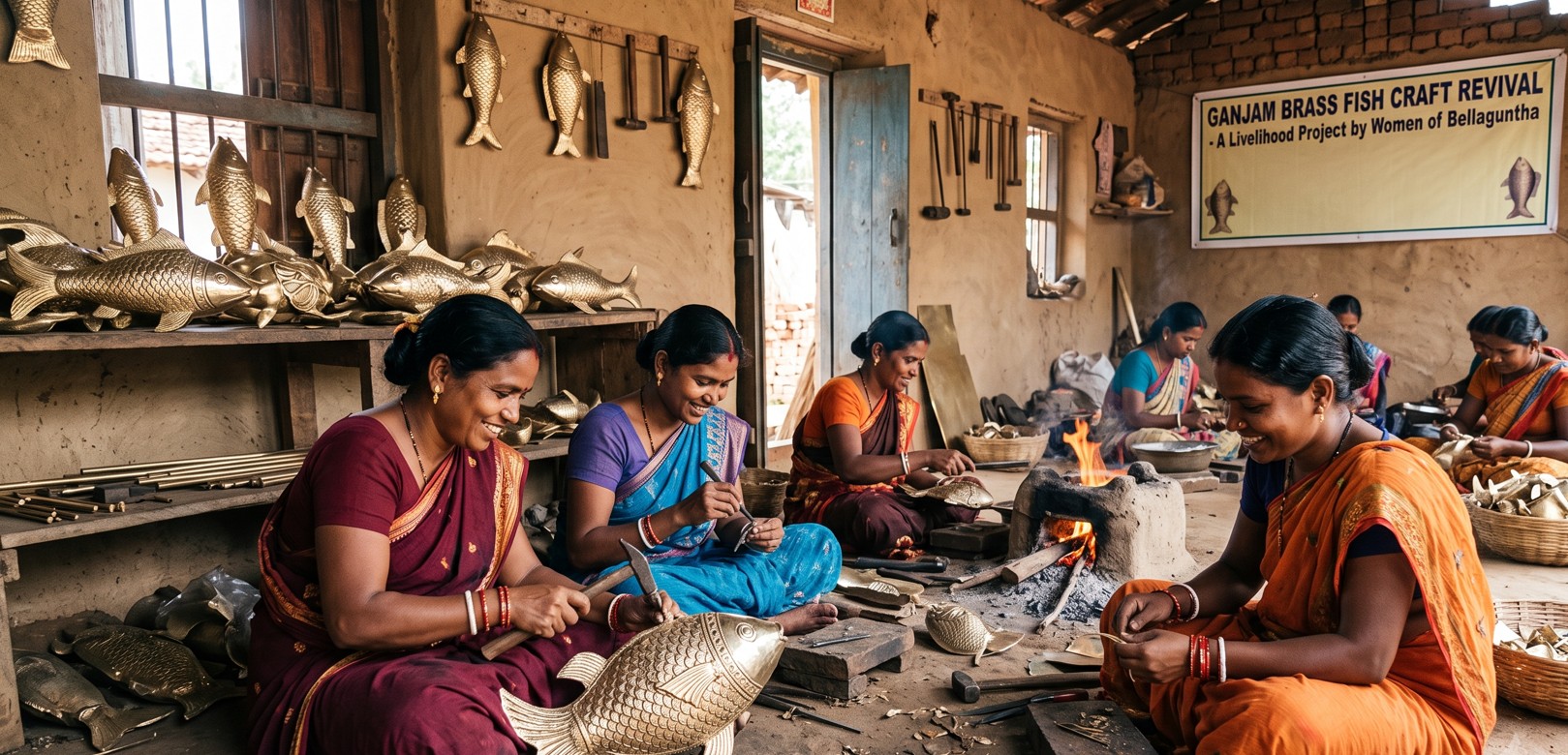
Representational Image
Twenty women from the village under Belaguntha block have come together under a Self-Help Group (SHG) to produce handcrafted brass fish and shrimp, which are gaining popularity as decorative pieces and festival gifts.
Working with simple hand tools and traditional techniques, the artisans carefully shape brass sheets into lifelike fish and shrimp. Each piece undergoes a meticulous process of cutting, hammering, heating, soldering and polishing before it is ready for sale. Many of the finished products are mounted in glass frames, enhancing their appeal as home décor items.
The initiative began after the women received training from master artisan Sushant Kumar Sahu. With technical guidance from the District Industries Centre (DIC), the group underwent a year-long skill development programme before launching their enterprise.
The project received a major boost when the Odisha Livelihoods Mission (OLM) extended financial assistance of around ₹2.04 lakh, enabling the women to procure raw materials, essential tools and establish a common workspace.
The SHG currently produces four to five handcrafted brass artefacts every day. Depending on the size and intricacy of the design, each item is priced between ₹1,000 and ₹5,000, providing the artisans with a steady monthly income.
“We complete our household work first and then spend a few hours every day making these brass fish. Earlier, we remained confined to our homes, but now this craft has given us confidence and financial independence,” said SHG member Namita Behera.
Another artisan, Mamata Maharana, said teamwork has been key to the group’s success. “All 20 of us joined hands to revive this traditional craft. We learned the techniques through DIC training and now prepare several pieces every day using both government-provided equipment and handmade tools,” she said.
Encouraged by the growing demand, the artisans now hope to take the craft to a wider market. They have appealed for greater government support, improved production facilities and a Geographical Indication (GI) tag for the traditional brass fish craft, which they believe would help establish its identity in national and international markets.
The initiative has emerged as an example of how traditional art, when combined with institutional support and community participation, can preserve cultural heritage while creating sustainable livelihoods for rural women.