Doctors Flag Rising Amputations in Telugu States at CME Held at KIMS Hospital

Hyderabad, Dec 15: Compared to other parts of the country, the two Telugu states have a significantly higher number of people suffering from diabetes. Experts warn that when diabetic patients develop foot ulcers, they often do not feel pain due to neuropathy. As a result, the ulcers worsen and eventually lead to limb amputations. One in every four diabetic patients faces this issue, according to specialists. Early detection and timely vascular treatments can help save the limb, said Dr. Venkatesh Bollineni, Consultant Vascular & Endovascular Surgeon at KIMS Hospital. With coordinated efforts among doctors from various specialties, many diabetic patients can avoid amputations, he added.
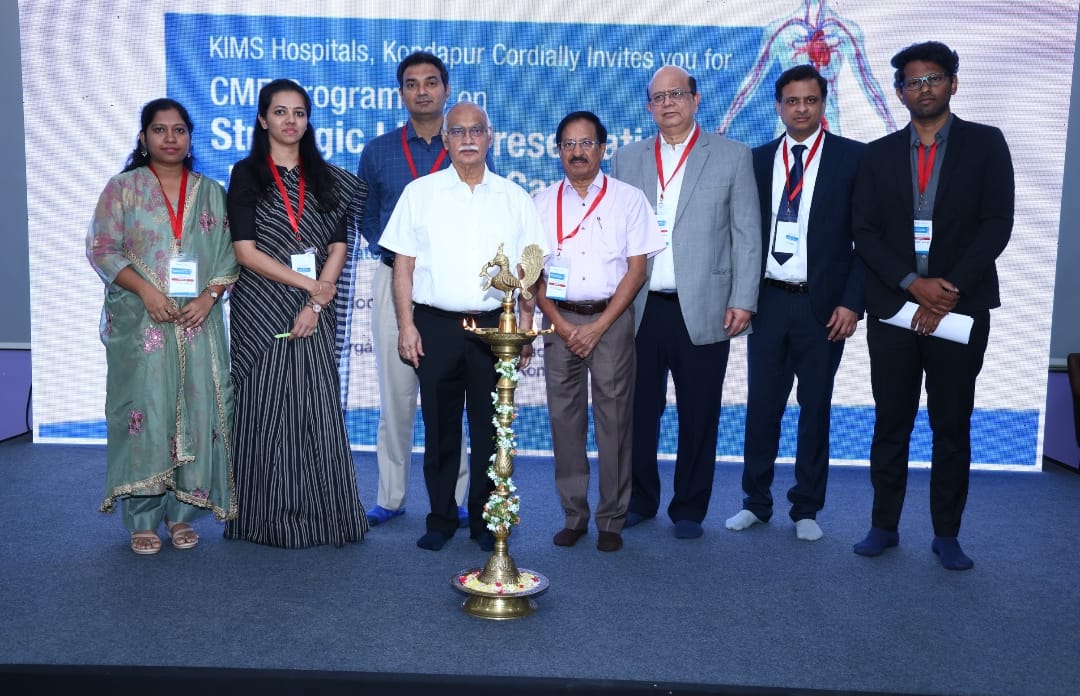
Hyderabad, December 14, 2025: Compared to other parts of the country, the two Telugu states have a significantly higher number of people suffering from diabetes. Experts warn that when diabetic patients develop foot ulcers, they often do not feel pain due to neuropathy. As a result, the ulcers worsen and eventually lead to limb amputations. One in every four diabetic patients faces this issue, according to specialists. Early detection and timely vascular treatments can help save the limb, said Dr. Venkatesh Bollineni, Consultant Vascular & Endovascular Surgeon at KIMS Hospital. With coordinated efforts among doctors from various specialties, many diabetic patients can avoid amputations, he added.

He spoke as the keynote speaker at the Continuing Medical Education (CME) program organised on Sunday at the hospital premises, which saw the participation of about 200 doctors from Hyderabad and surrounding areas, including vascular surgeons, plastic surgeons, podiatrists, general surgeons, endocrinologists, internal medicine specialists, and infectious disease experts.

Speaking on the occasion, Dr. Venkatesh Bollineni and his team said, “The main aim of this CME is to standardize treatment protocols to prevent and reduce amputations in diabetic patients. Early risk detection, appropriate vascular treatments, infection control, wound and soft tissue management, and long-term foot care education are crucial. Diabetes is far more prevalent in Telangana and Andhra Pradesh compared to other regions, leading to a higher risk of amputations here. One out of every four diabetics develops foot ulcers at some point in their lifetime. Because of reduced sensation, many patients fail to notice the wound, resulting in severe complications. Among those with ulcers, one in three eventually requires amputation.

Therefore, doctors should focus not only on diabetes control but on comprehensive management. Advanced wound-care protocols and infection control must be followed. To protect the legs of diabetic patients, vascular surgery, endocrinology, plastic surgery, and orthopedics departments must work in coordination. With the advent of endovascular techniques, modern reconstructive methods, and dermal substitutes, treatment outcomes have greatly improved. However, one major challenge is that many patients approach doctors only in the final stages.”

Plastic Surgeon Dr. Sharath Chandra Reddy and his team advised that diabetic patients must take special care of their feet and seek medical attention immediately even for minor wounds, instead of neglecting them. Early screening and proper awareness can prevent most amputations, they emphasized. The organizers said KIMS Hospital is committed to improving awareness among doctors through such CME programs and providing better treatment for patients.

He spoke as the keynote speaker at the Continuing Medical Education program organised on Sunday at the hospital premises, which saw the participation of about 200 doctors from Hyderabad and surrounding areas, including vascular surgeons, plastic surgeons, podiatrists, general surgeons, endocrinologists, internal medicine specialists, and infectious disease experts.

Speaking on the occasion, Dr. Venkatesh Bollineni and his team said, “The main aim of this CME is to standardize treatment protocols to prevent and reduce amputations in diabetic patients. Early risk detection, appropriate vascular treatments, infection control, wound and soft tissue management, and long-term foot care education are crucial. Diabetes is far more prevalent in Telangana and Andhra Pradesh compared to other regions, leading to a higher risk of amputations here. One out of every four diabetics develops foot ulcers at some point in their lifetime. Because of reduced sensation, many patients fail to notice the wound, resulting in severe complications. Among those with ulcers, one in three eventually requires amputation.

Therefore, doctors should focus not only on diabetes control but on comprehensive management. Advanced wound-care protocols and infection control must be followed. To protect the legs of diabetic patients, vascular surgery, endocrinology, plastic surgery, and orthopedics departments must work in coordination. With the advent of endovascular techniques, modern reconstructive methods, and dermal substitutes, treatment outcomes have greatly improved. However, one major challenge is that many patients approach doctors only in the final stages.”

Plastic Surgeon Dr. Sharath Chandra Reddy and his team advised that diabetic patients must take special care of their feet and seek medical attention immediately even for minor wounds, instead of neglecting them. Early screening and proper awareness can prevent most amputations, they emphasized. The organizers said KIMS Hospital is committed to improving awareness among doctors through such CME programs and providing better treatment for patients.